When to call for a consultation
A consultation is about understanding a tree before deciding what to do with it. In Woodbridge we are often called when:
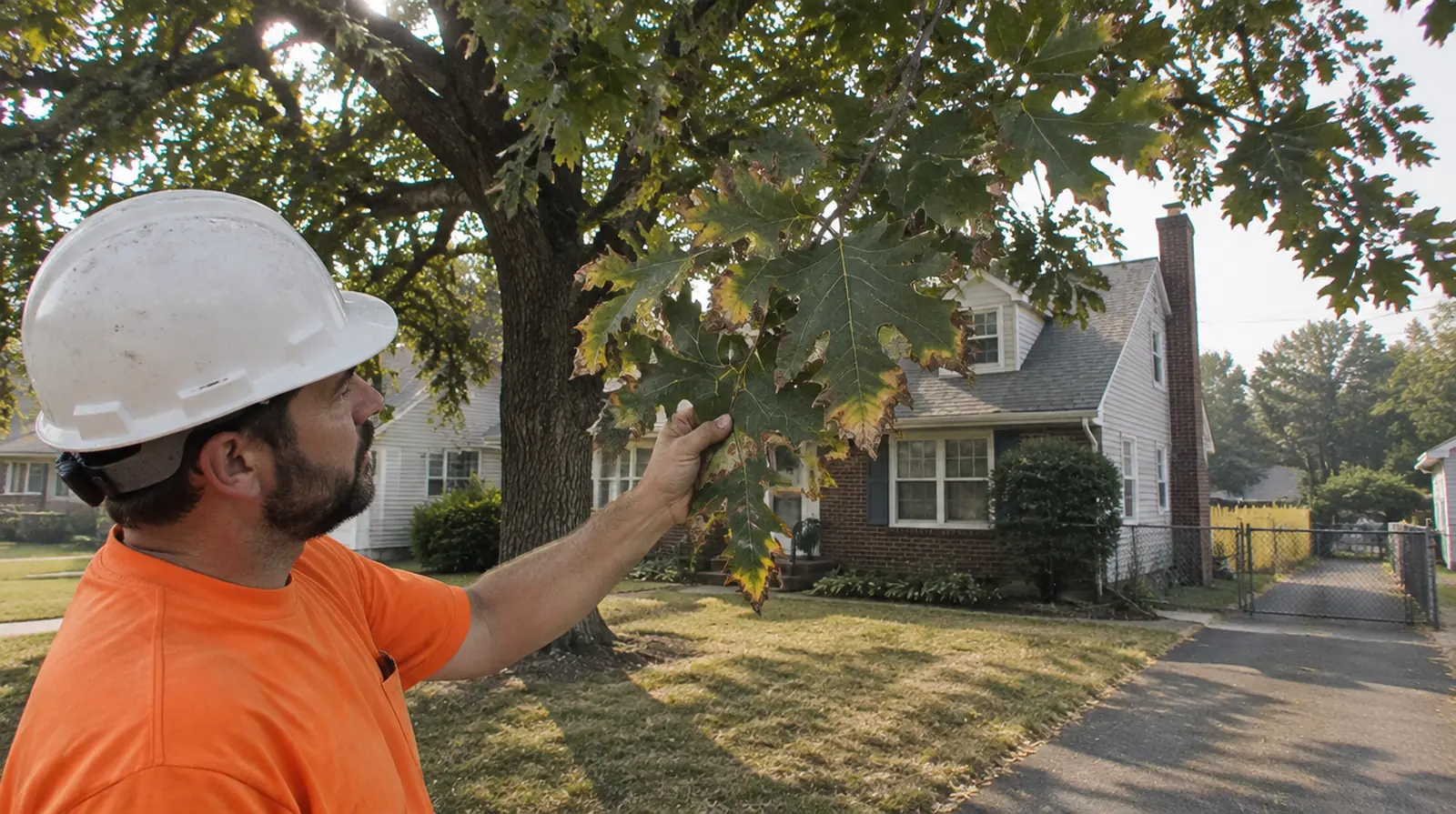
- An oak has leaves that brown at the edges every summer, starting earlier each year.
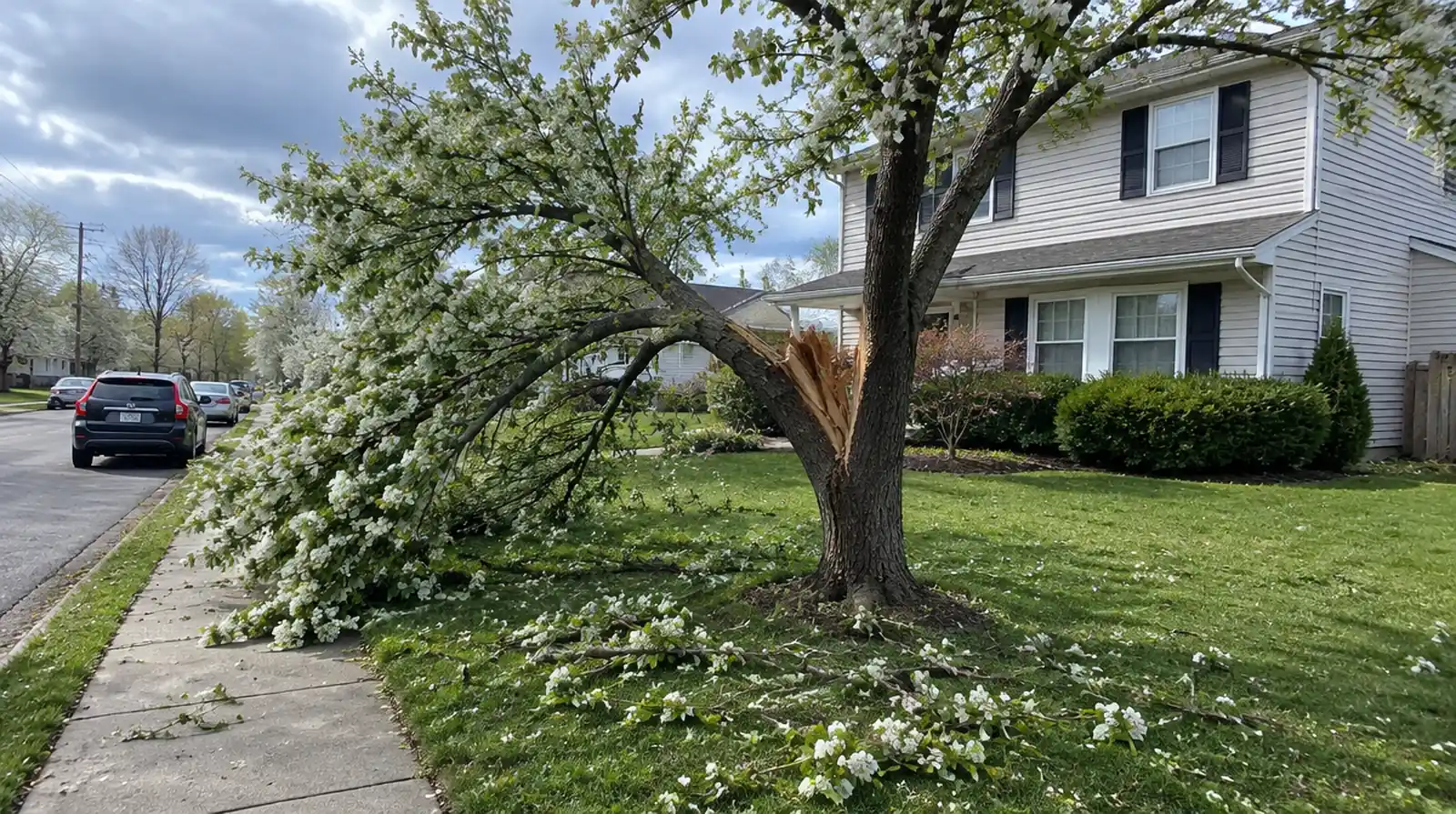
- A Bradford or Callery pear has a tight V fork, or one has already split.
- You see spotted lanternflies swarming a tree, or a sticky black coating on everything below it.
- Branches hang over the house, the driveway or a neighbor's garage.
- You are adding a driveway, a fence, an addition or a pool and want to protect a tree.
How we inspect
We start by looking at the whole tree and the space around it, then work in. We check the root flare, look for girdling roots and soil changes, and examine the trunk for cracks, cavities, fungus and loose bark. We look closely at the unions where major limbs meet, since that is where many failures start. In summer we check the leaves for patterns of scorch, spots or discoloration. Afterward we explain what we found and give you a written summary with clear priorities.
What we see on Woodbridge trees
Bacterial leaf scorch. Pin oaks, red oaks and some maples in central New Jersey suffer from this disease, which plugs the water system of the tree. Leaves brown at the margins in mid to late summer, with a yellowish band between brown and green. It gets worse year after year. There is no cure, but care and pruning can buy time, and we can tell you how far along a tree is.
Callery pear failures. Bradford pears grow fast and form narrow forks with bark trapped inside. Many split apart in their 20s. We check which ones can be reduced and which should come down before they fall.
Spotted lanternfly. This invasive insect is established in Middlesex County. It feeds heavily on tree of heaven and also on maples, black walnut and other trees. Most healthy shade trees survive, but heavy feeding adds stress and leaves sooty mold.
Emerald ash borer. This borer has killed most untreated ash in New Jersey. Standing dead ash become brittle quickly and are dangerous to climb or leave over buildings.
Clay and compaction. Woodbridge was once a center for clay mining and brick making, and dense clay is still common under lawns here. It drains poorly, which stresses roots and makes uprooting more likely in saturated soil during big storms like Sandy and Ida.
Street trees and permits
Trees between the sidewalk and the curb, or in the township right-of-way, are often not yours to remove or prune heavily. If the tree in question may be public, check with Woodbridge Township before any work. For trees near a property line, our written notes can help you and your neighbor agree on next steps. On corner lots and along busier roads like Route 27 and Green Street, also think about sight lines for drivers and wires overhead, which can change what kind of pruning is allowed.
What comes next
You may not need any work right away. Simple steps like mulching, deep watering in dry spells, and keeping mowers off the root flare go a long way. When work makes sense, it could be tree trimming to clear dead wood and lighten heavy ends, tree cabling to support a weak fork, or tree removal when a tree is too far gone. It is up to you whether we do the work.
We cover all of Woodbridge Township, including Iselin, Colonia, Avenel, Fords, Hopelawn, Keasbey, Port Reading and Sewaren, and nearby Edison, Rahway, Carteret and Metuchen.
Questions
Can a scorched oak be saved?
Bacterial leaf scorch cannot be cured, but many oaks live with it for years. The question is how fast it is moving and what the tree hangs over.
When is the best time for a consultation?
Summer shows leaf problems best. Winter shows branch structure best. Either works to get started.